
Uncategorized
American Silver Eagle History: From 1986 to Today – Origins, Designs & Key Dates
Feb
American Silver Eagle History: From 1986 to Today
The American Silver Eagle is the official 1 oz silver bullion coin of the United States and one of the most important modern bullion coins in the world. Since its launch in 1986, the Silver Eagle has become the most widely traded silver bullion coin, trusted by investors and collectors across the globe.
If you’ve searched for “American Silver Eagle history”, “when did American Silver Eagles start?”, or “Silver Eagle design changes”, this guide walks through how the series began, how it evolved, and why it matters today.
Origins of the American Silver Eagle Program
The American Silver Eagle program was created in the mid‑1980s in response to two main forces:
- Surplus U.S. government silver
- Growing interest in precious metals investment
The foundational law was the Liberty Coin Act, signed into law in 1985, which authorized the United States Mint to strike silver bullion coins containing 1 troy ounce of .999 fine silver.
Key points:
- First year of issue: 1986
- Authorized by: Liberty Coin Act (Public Law 99‑61)
- Issued by: United States Mint
- Purpose: Provide investors with a convenient, government‑backed 1 oz silver bullion coin
For the official legislative and program description, see:
American Eagle Bullion Coins – United States Mint
The Debut: 1986 American Silver Eagle
The first American Silver Eagles were struck and released in 1986. From the start, they followed a simple, powerful formula:
- Metal: Silver
- Purity: .999 fine
- Weight: 1 troy ounce
- Face value: $1 (USD), legal tender
- Finish: Bullion (BU) and Proof versions
Why it was significant:
- It gave investors a standardized, trusted 1 oz silver coin backed by the U.S. government.
- It quickly became a benchmark product in the global silver market.
The success of the 1986 launch set the tone for the entire series.
Classic Designs: Walking Liberty and the Original Eagle Reverse (1986–2020)
From 1986 until mid‑2021, the American Silver Eagle used the same iconic design combination:
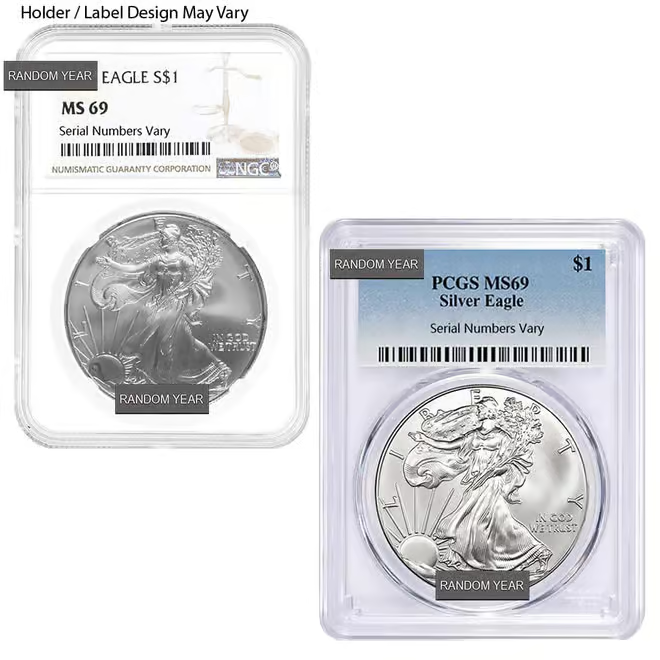
Obverse – Walking Liberty
- Adapted from Adolph A. Weinman’s Walking Liberty Half Dollar (1916–1947)
- Lady Liberty strides toward the sunrise, draped in the U.S. flag
- Inscriptions: LIBERTY, IN GOD WE TRUST, and the year
Reverse – Heraldic Eagle (Type 1)
- Designed by John Mercanti, Chief Engraver of the U.S. Mint
- Features a heraldic eagle with shield, clutching arrows and an olive branch
- Inscriptions: UNITED STATES OF AMERICA, 1 OZ. FINE SILVER, ONE DOLLAR, and E PLURIBUS UNUM
This design pairing quickly became one of the most recognizable in modern numismatics.
For background on the design and engravers, the U.S. Mint provides an overview here:
American Eagle Coins – U.S. Mint Overview
Expansion: Bullion, Proof, and Burnished Silver Eagles
Over time, the Silver Eagle program expanded beyond just bullion coins:
Bullion Silver Eagles (1986–present)
- No mint mark
- Sold through authorized distributors
- Intended primarily for investors and stackers
Proof Silver Eagles (1986–present, some gaps by mint/year)
- Mirror‑like fields with frosted devices
- Mint marks (e.g., S, P, W) depending on the issuing Mint
- Produced for collectors, often with limited annual mintages
Burnished / Uncirculated Collector Issues (from 2006)
- Special “burnished” (satin‑like) finish
- Include mint marks (often W, sometimes S)
- Marketed as a premium collector version between bullion and proof
These additional finishes and mintmarks created a rich collecting field, with enthusiasts pursuing:
- Date runs (one of each year)
- Mintmark sets (West Point, San Francisco, Philadelphia)
- Special editions and anniversary sets
Special Issues and Anniversary Releases
Over the history of the American Silver Eagle, the U.S. Mint has released several notable special issues:
- 1995‑W Proof Silver Eagle
- Part of the 10th Anniversary Gold & Silver Eagle set
- Low mintage, one of the key dates in the series
- 2006 20th Anniversary sets
- Included special burnished and reverse‑proof Silver Eagles
- 2011 25th Anniversary sets
- Multiple finish types in one set, highly popular with collectors
- 2016 30th Anniversary issues
- Edge lettering marking the anniversary on certain proofs
- Various special labels, privy marks, and limited releases
- Examples include First Strike, Early Releases, Anniversary labels, and occasional privy‑marked editions (from third‑party grading companies and special collaborations)
For collectors, these issues add a numismatic layer to the bullion value of Silver Eagles.
Major Design Change: Type 1 to Type 2 Reverse (2021)
One of the biggest events in American Silver Eagle history was the reverse design change in 2021.
Up to mid‑2021, Silver Eagles used the original heraldic eagle reverse (Type 1). In 2021, to mark the series’ 35th anniversary, the U.S. Mint introduced a new reverse design (Type 2):
- Type 1 (1986–early 2021): Heraldic eagle with shield
- Type 2 (mid‑2021–present):
- An eagle in flight, holding an oak branch
- Designed to showcase more naturalistic, modern artwork
- Includes updated security features to combat counterfeiting
This split means 2021 is a special year with both Type 1 and Type 2 issues, increasing its interest to collectors.
U.S. Mint article on the new reverse and updates:
The American Silver Eagle Turns 35 – U.S. Mint
Mints Involved in American Silver Eagle Production
Over its history, different U.S. Mint facilities have been involved:
- West Point Mint (W) – Primary producer for bullion and many proofs
- San Francisco Mint (S) – Early proofs and some later special issues
- Philadelphia Mint (P) – Some proof coins and supplemental bullion production
While bullion Silver Eagles usually lack a visible mint mark, proof and burnished versions typically show:
- W for West Point
- S for San Francisco
- P for Philadelphia (on certain issues)
Collectors sometimes also pay attention to “hidden” or emergency production bullion coins identified by packaging or grading‑service data.
American Silver Eagles in the Modern Bullion Market
Over the decades, the American Silver Eagle has become:
- A benchmark for silver bullion pricing and premiums in North America
- A core holding for many individual investors, IRAs, and long‑term savers
- One of the most widely recognized silver coins worldwide
From the perspective of many investors, when you think “1 oz silver bullion coin”, the American Silver Eagle is often the first image that comes to mind.
For market‑oriented silver insights (not Silver‑Eagle‑specific, but helpful for context), see:
Investing in Silver – Investopedia
Key Milestones in American Silver Eagle History (Timeline)
- 1985: Liberty Coin Act authorizes 1 oz silver bullion coins
- 1986: First American Silver Eagle bullion and proof coins issued
- 1995: 10th Anniversary set includes key 1995‑W Proof Silver Eagle
- 2006: 20th Anniversary; introduction of burnished Silver Eagles
- 2011: 25th Anniversary sets released
- 2016: 30th Anniversary; special edge lettering on certain issues
- 2021: 35th Anniversary and major reverse design change (Type 1 to Type 2)
- 2020s: Continued production with growing variations in finishes, labels, and special releases
Why the History of the American Silver Eagle Matters to Investors
Understanding the history of the American Silver Eagle helps investors and collectors:
- Recognize key dates and special issues that may command higher premiums
- Understand why Silver Eagles often carry higher premiums than generic rounds or bars
- Appreciate the long‑running trust and brand value behind the series
